The Biggest Mistake New Collectors Make
Why chasing PSA 10 upside without checking downside economics burns submissions.
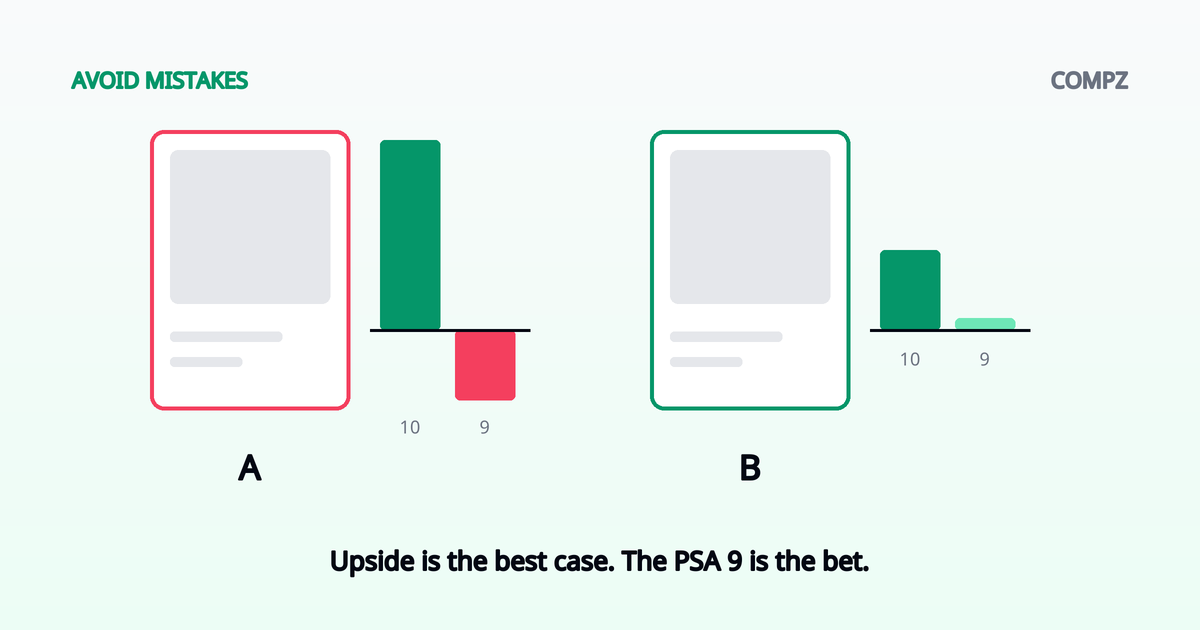
The mistake: picking cards to grade by how big the PSA 10 premium is.
It's the most natural thing in the world. You see a card that sells for $50 raw and $300 in a PSA 10 — six times the raw price — and it looks like the obvious submission. The bigger the multiple, the better the card. Right?
Not quite. A big PSA 10 premium tells you what happens if everything goes right. It says nothing about what happens when it doesn't — and with modern cards, it usually doesn't.
Two cards, side by side
Worked example · illustrative numbers
The exciting card vs. the boring card
| Card A | Card B | |
|---|---|---|
| Raw price | $50 | $40 |
| PSA 10 price | $300 (6× raw) | $180 (4.5× raw) |
| PSA 9 price | $70 | $120 |
| Profit if PSA 10 | +$148.87 | +$54.62 |
| Profit if PSA 9 | −$51.34 | +$2.39 |
| PSA 10 rate needed to break even | about 26% | none — a 9 covers it |
Both use PSA's Standard tier ($59.99, ~95 business days), a 12.95% selling fee and 8% a year for time — the method in how to calculate grading ROI.
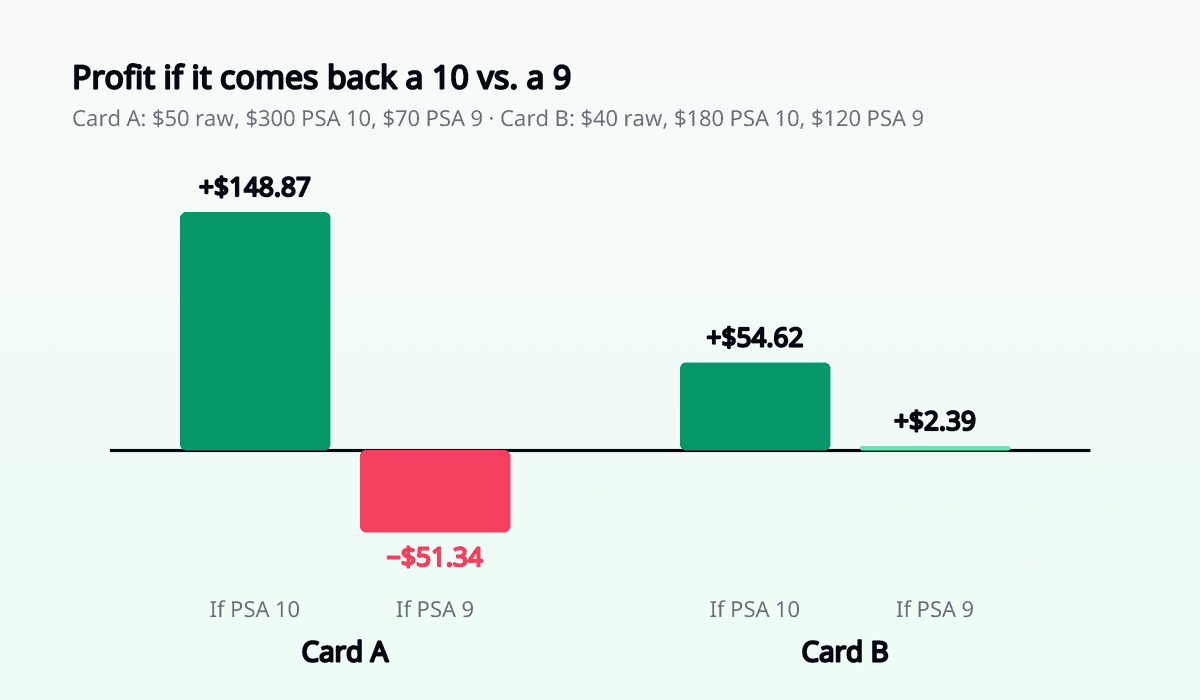
Card A is the one people post about. Card B is the one that pays. If Card A comes back a PSA 9 — which is a perfectly normal outcome for a nice-looking card — you lose $51. To come out ahead over several submissions, you need more than one in four copies to gem.
Card B makes less when it gems, but a PSA 9 still breaks even. You aren't betting on a 10; a 10 is a bonus.
Why the premium misleads
- A big premium often means 10s are hard to get. PSA 10s of a card command a premium partly because they're scarce relative to 9s. The same thing that makes the 10 valuable makes it unlikely.
- The PSA 9 is where most of the risk lives. When the 9 trades near the raw price, every missed gem costs you the grading fee and then some.
- Fees hit cheap cards hardest. A $59.99 fee is a rounding error on a $1,000 card and most of the margin on a $40 one.
- Multiples ignore the selling fee and the wait. Roughly an eighth of the sale goes to fees, and your money is gone for three to four months.
What to do instead
- 1Run the PSA 9 line first. If a 9 loses money, the card needs a real chance of a 10 to make sense.
- 2Work out the PSA 10 rate you'd need, using the break-even formula, and ask honestly whether your copy clears it.
- 3Judge the copy in front of you, not the card in general — not all copies are equal.
- 4Rank candidates by what they make in a normal outcome, not the best one.
The question isn't “how much does a 10 sell for?” It's “what happens if I don't get one?”
PSA fees as of October 2026 — always confirm current tiers on psacard.com before you submit. Card A and Card B are illustrative, not real listings.
Search any card on Compz to see its PSA 9 outcome and floor status next to the PSA 10 upside.
Check the PSA 9 floor on a card